“The EU is facing acute geopolitical upheaval and unpredictability” – these are the opening words that can be read on the official website of the Cypriot presidency, introducing its programme. They show that Cyprus recognises that it is taking over the Council in a drastically different context than when it first held the presidency in 2012. Despite being one of the smallest member states, it is a country that understands the importance of geopolitics, relying on its previous experience and security perspective in relation to Turkey. Below we analyse what the Cypriot Presidency brings and what implications it may have for both the EU and the Western Balkan countries.
Autonomy in the first place.
Although Cyprus points out that Europe has faced complex and existential crises before – managing to respond to the demands of the times through evolution and strengthening of its capacities – this time it is recognised that the challenge is far greater. Cyprus warns that what is new is “intensity, plurality and complexity of the challenges”. For this reason, strengthening European autonomy is “the necessary next step of our evolving European integration project”. That is why the Cypriots have chosen “An Autonomous Union” as their slogan. However, the second part of the slogan refers to it being “Open to the World”. This is in direct contrast to US attempts to defend its national interests in the first place, at the expense of all the international achievements to date – such as the United Nations and the building of free trade regimes – to which it has contributed the most. In this way, the message is sent that a more autonomous EU – more self-sufficient and capable – will not contradict its current vision of the global order.
Achieving these objectives will primarily require strengthening the Union’s capacity to act as an autonomous security actor, with capacities capable of responding to growing challenges. As Cypriot President Christodoulidis pointed out, an autonomous Union is first and foremost a secure Union. As he further emphasizes, Cyprus has “first-hand knowledge of the importance of defending a state’s sovereignty, territorial integrity, and independence”. Building on the achievements of the Danish Presidency, Cyprus aims to accelerate the implementation of the so-called White Paper for European Defence, which entails the strengthening of all the Union’s capabilities by 2030, as well as all accompanying defence initiatives, such as the Common Defence Fund (SAFE) and the European Defence Industry Programme (EDIP) Essentially, Cyprus will continue to do what its Trio partners have been doing, which is to support a multidimensional security agenda.
At the same time, Cyprus can be expected to strive for a stronger EU engagement in the Eastern Mediterranean. While Cyprus unreservedly supports its support for Ukraine, emphasis will also be placed on the immediate security environment of this member state. On the one hand, for Cyprus, nuanced relations with Turkey are of importance. Since Turkey invaded the northern part of Cyprus, Nicosia has no effective control over that part of the territory. This is an aggravating circumstance, given that Turkey does not recognize the Republic of Cyprus either – and prevents its ships from sailing into Turkish ports or planes flying over Turkish territory – while at the same time Turkey is a member of the EU’s Customs Union and a necessary partner for managing numerous crises, from migration to Ukraine. On the other hand, geographically close to the Middle East, Cyprus will insist on a New Pact for the Mediterranean as a way to strengthen the Union’s strategic interests in the region, including humanitarian efforts and assistance to Gaza. It is therefore not surprising that developments in the Mediterranean represent the alpha and omega, i.e. a key landmark for understanding Cypriot foreign policy, and that Cyprus will insist on placing an increased focus on this geographical area as well.
Competitiveness as an indispensable necessity
As has been seen in the first weeks since Cyprus took over the presidency, the word competitiveness has dominated key European political and expert discussions. Cyprus is among the member states that undoubtedly recognise the fact that strengthening the EU’s autonomy at all levels is intrinsically linked to improving its global competitiveness. Since Mario Draghi published his report in 2024 – which pointed out that without changing the over-dependence on mainstream players, the Union cannot survive as a relevant and sustainable actor – Europeans’ eyes have been opened. In line with the newly acquired insights, the steps to be taken during the Cypriot presidency will relate to further work on simplifying procedures, cutting red tape and strengthening the single market. At the beginning of February, the members discussed the possibility, which Cyprus also spoke about at the very beginning of its mandate, to implement all these steps in 2026, without further delay.
These discussions are gaining importance because the Cypriot presidency is expected to intensify negotiations in the Council on the Multiannual Financial Framework for the period 2028-2034. The key message of the proponents of its increase is that without significant budgetary breakthroughs, there can be no strengthening of competitiveness. The Commission has previously come up with an ambitious proposal to almost double the budget, reaching €2 trillion. While Cyprus will undoubtedly be – as a country that is a net recipient of funds from the EU budget – in favour of increasing overall financial allocations in the future, it will have the demanding task of reconciling the positions of its members, given that many net-recipients have stood by the Commission, while more frugal ones, such as Germany, have immediately expressed their scepticism and belief that the budget will have to be significantly revised and reduced. As in the case of competitiveness, Cyprus’ ambition is to reach a common position on the future financial framework this year. Practice, however, shows that this is an ambitious goal, especially if we take into account that negotiations on this “hot potato” are being conducted almost until the last day of the deadline.
Enlargement and the Sculpture Programme
There are several reasons why the Cypriot presidency comes at a turning point for many candidate countries.
- Ukraine has begun publicly demanding membership in the Union in 2027, and the events during the Cypriot presidency will certainly determine its further European path. Although it is widely known that it is impossible for it to meet all the conditions for membership by then, that is, to fully harmonize with the EU acquis and demonstrate its effective implementation, Ukrainian President Zelensky insists that by the end of the year, much-needed steps will be taken in the most important areas. The possibility of including a year of membership in an agreement that should end Russian aggression, and which should provide guarantees to Ukraine that it will be able to count on European partners in the future, is currently being scrutinised. Currently, the EU has informally opened three clusters with Ukraine through the so-called frontloading procedure proposed by Denmark. If the goal is to help Ukraine on its European path in a timely manner, the talks on the opening of the remaining clusters can be expected in the coming months.
- From the Western Balkans, this year is the most important for Montenegro. This is a country that has managed to close a large number of chapters with exceptional speed, and whose leadership insisted on completing all its reforms by the end of this year. This implied that the Union would also be proportionately responsive, i.e. that it would continue to close the negotiating chapters. With the support of Cyprus, the closure of up to ten chapters is being considered. The fact that, at the beginning of the Cypriot mandate, Chapter 32 was closed – which covers financial control (an area within the Fundamentals cluster) – is a step in the right direction. In addition, in line with the conclusions of the end of 2025, Cyprus intends to launch an ad hoc working group for the drafting of an accession treaty with Montenegro. As the Cypriot Ambassador to Serbia stated, the formation of this group would be a “point of no return”. If the described intentions of Cyprus are really realized, it will really send a message that Montenegro’s ambition to become the 28th member in 2028 is within realistic possibilities.
- In addition to Montenegro, Albania has so far managed to break records, opening all six clusters in a very short time. During the Cypriot Presidency, the most significant step forward would be the adoption of a positive decision and the adoption of the interim benchmark assessment report (IBAR), in order to start closing the chapters. This would be a turning point for Tirana, given that Montenegro entered its final phase just after resolving the IBAR hurdle in 2024. With the support of Cyprus, the goal is to close several chapters. It is too early to know whether this ambition will be achieved, especially considering that the most difficult part of the job for Albania is just beginning. A breakthrough in this field would send a message that Albania can make progress towards becoming a member of the Union in the foreseeable future, right next to Montenegro.
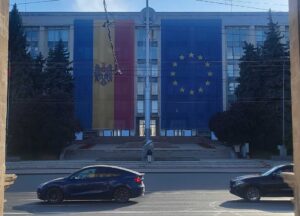
- As for the other candidates, although they are less in focus, Cyprus will try to keep them on the Union’s agenda. For example, Moldova, like Ukraine, managed to informally open three clusters with the help of the frontloading procedure. Now the goal is to open the remaining clusters as well. Although there is no mention of a target year for its membership, there is a possibility of separating the Moldova and Ukraine processes, especially if they work with Ukraine to define the year of membership as part of the peace negotiations. When it comes to Serbia, Cyprus will insist that Belgrade has met the technical criteria for the opening of Cluster 3. Although it is too early to say whether Cyprus will be able to convince other member states to open the cluster, the fact is that the chances of doing so will increase only if Serbia further shows readiness to fulfil the key rule of law reforms it has committed to and to align its foreign policy with the vision of the Union. For these countries, therefore, the political benevolence of Cyprus will not mean an automatic acceleration of the process.
Taking all factors into account, Cyprus will face the delicate task of balancing geopolitical imperatives with the need to preserve the Union’s legal and functional integrity. Although the ultimate outcome of these processes cannot be known, it can be expected that Cyprus, as a traditional supporter of enlargement, will certainly seek to secure support for the candidate countries in order to send the message that membership is within reach for those willing to extend their hand. At the same time, given expectations that the Commission will present its pre-enlargement policy reviews, Cyprus is likely to promoting enlargement policy as an integral component of the Union’s broader, internal reforms.
Originally published on EUpravozato.